Why people choose it.
What Austin Is Actually Like
Austin's character varies dramatically by quadrant, and it is worth being honest about that. The city is not one place. Hyde Park bungalows and oak-canopy streets in central Austin feel nothing like the Domain's glass towers and tech campuses five miles north. East Austin changes block by block — a hundred-year-old house next to a modern duplex next to a restaurant that opened six months ago. Southwest Austin backs up to the Barton Creek Greenbelt and feels more like Hill Country than city, even though it is inside the limits.
The food and music culture is genuine. Franklin Barbecue, Uchi, Launderette, and the food truck parks are not hype. South Congress and South Lamar have the street character that draws people who could live anywhere. The Moody Center and the venues on Red River keep the live music identity alive even as the city has grown. SXSW and Austin City Limits Music Festival in Zilker Park mark the calendar every year.
Outdoor recreation is part of daily life in a way that matters to buyers. Barton Springs Pool is a natural spring-fed swimming hole inside the city. Lady Bird Lake's 10-mile hike-and-bike trail runs through the center. The Barton Creek Greenbelt offers trails, swimming holes, and limestone bluffs minutes from central neighborhoods. Zilker Park ties it together.
Growth has reshaped the commute math. I-35 through downtown is one of the more congested corridors in Texas, and MoPac slows in both directions during peak hours. Where you work should be the first conversation, not the last. Two houses at the same price can have very different commute outcomes depending on which half of the city they sit in.
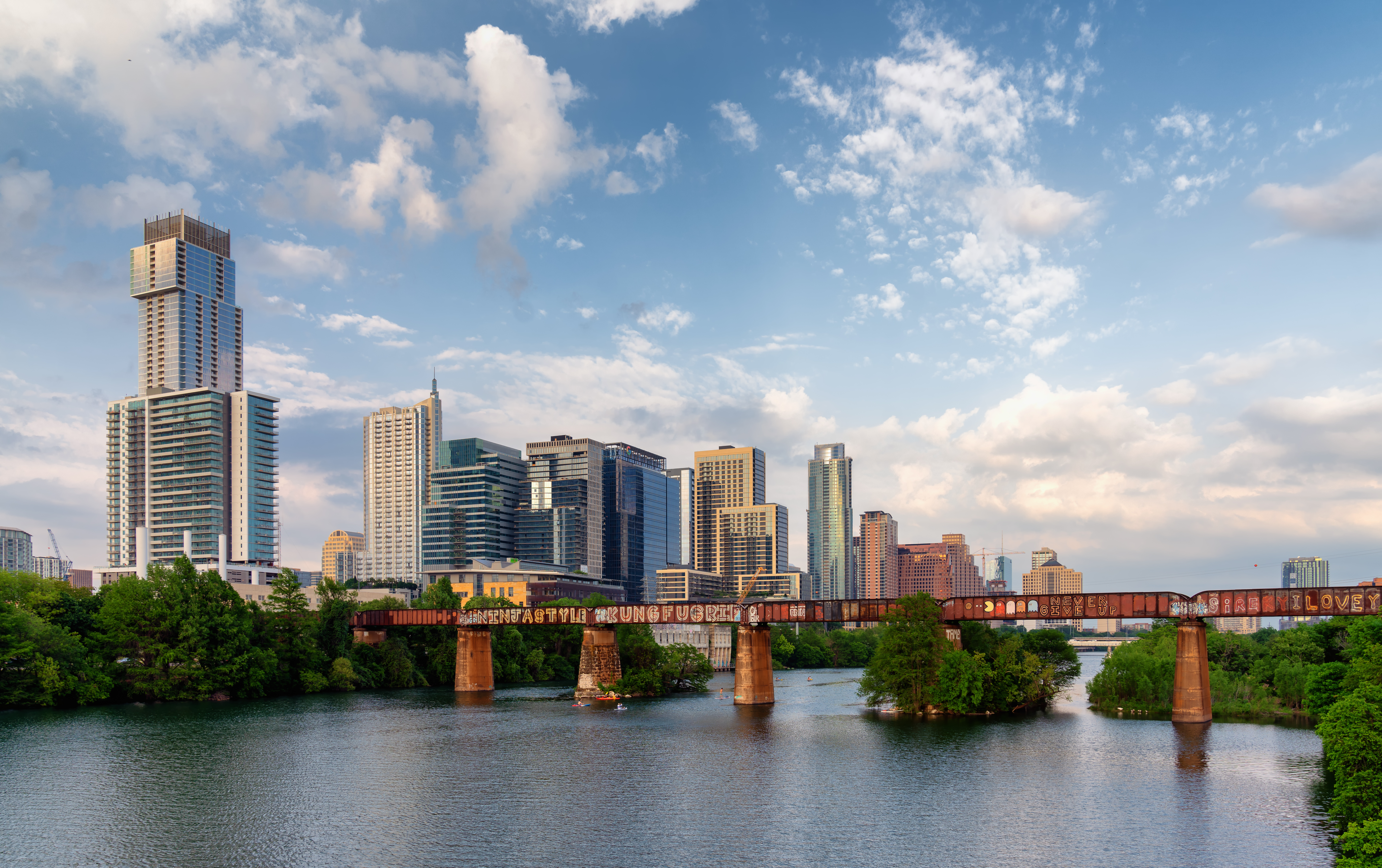
Eight school districts, one city
Austin ISD covers the majority of the city, but addresses inside city limits also feed Del Valle, Manor, Pflugerville, Round Rock, Leander, Eanes, and Lake Travis ISD. Two houses a mile apart can be in completely different districts. Verify with the district for every specific address — this is where buyers get surprised.
Older housing means real inspections
Central Austin's housing stock runs from the 1920s through the 1970s, with a lot of pier-and-beam foundations and original systems. Beautiful streets and real inspection findings come together here. A general inspection is the starting point, not the finish. Bring a foundation specialist on anything built before 1970.
Floodplain is a real question
Onion Creek, Shoal Creek, Williamson Creek, and Boggy Creek have all flooded homes in living memory, and some neighborhoods have been through city buyout programs. Check the FEMA flood map during option period and pull an insurance quote before removing contingencies.
Property taxes are high and the exemption matters
Travis County rates plus a high assessed value make Austin one of the more expensive places to hold property in Texas. If you carry a VA disability rating, the Texas property tax exemption is worth the most here in dollar terms of anywhere in Central Texas. Run those numbers before you commit.
Traffic decides your neighborhood
I-35, MoPac, and US-183 all fail at different times of day in different directions. Telling me your employer first cuts the search in half before we start. Buying on the wrong side of downtown for your commute is an expensive mistake when you are doing it daily.
Condos require extra steps
Downtown and central condo transactions involve HOA financials, reserve studies, special assessments, and lender approval of the building itself. A VA loan requires a VA-approved project — that approval is on the building, not the unit. I check project approval before you fall for a view.
Honest answers.
Is Austin a Good Fit for You?
Austin makes sense for different buyers for different reasons. It also has real tradeoffs that are worth naming before you start looking.
Tech and corporate professionals
North Austin, the Domain area, and the Parmer Lane corridor put you close to Apple, Dell, Amazon, Meta, and other major campuses without crossing downtown.
Military and veterans
Camp Mabry is the only active military installation in Central Texas and it is inside the city. If you report there daily, living in Austin buys back commute time that suburban alternatives cannot.
Remote workers
Central Austin and East Austin offer walkable density, independent coffee shops, and coworking access. No commute math required.
Buyers wanting established neighborhoods
Hyde Park, Tarrytown, Travis Heights, and Barton Hills offer mature tree canopy, character, and streets that took decades to develop. That does not exist in new suburbs.
Luxury buyers
West Austin — Tarrytown, Barton Creek, and the Westlake Hills area — along with Lake Austin waterfront, represents some of the most desirable real estate in Central Texas.
First-time buyers and budget-conscious buyers
Austin's entry-level inventory is limited and priced above most suburbs. East Austin and some north Austin addresses can be starting points, but the honest answer is that comparable money buys more outside the city.
Meaningful tradeoffs to consider
Austin carries the highest price per square foot in Central Texas. Traffic on I-35 and MoPac is a daily reality with no clean fix. Property taxes are among the highest in the metro. Parking and density in central neighborhoods mean lifestyle adjustments for buyers accustomed to suburban space. Some outer Austin addresses — with Austin mailing addresses — sit outside city limits in the ETJ, where rules and services differ from inside city limits.
The market, plainly stated.
Austin Real Estate
Austin's housing market is a collection of micro-markets that happen to share a city name. Price per square foot, housing age, lot size, and available inventory differ significantly depending on where in the city you are looking.
Central Austin — Hyde Park, Rosedale, Crestview, and the Bungalow Belt — is largely 1920s through 1950s construction: wood frame, pier-and-beam foundations, original-era systems on many homes, and small lots. These are the most historically in-demand addresses in the city. Condition varies widely and inspection findings are common.
East Austin has seen rapid infill development since the early 2010s. Modern builds on standard city lots sit alongside renovated bungalows and untouched older homes. East Austin offers the widest price range inside city limits, from starter-priced resale to architect-designed luxury.
Mueller is the city's flagship planned community on the former Robert Mueller Airport site. It offers single-family homes, townhomes, mixed-use residential, parks, and a farmers market in a walkable format. HOA and design rules are strict; resale has been consistent.
North Austin — the Domain area, Wells Branch, Milwood, and the Parmer Lane corridor — has 1980s and 1990s resale homes plus newer condo and apartment construction near tech campuses. Many addresses in this corridor feed Round Rock ISD rather than Austin ISD, which surprises buyers.
Downtown condo inventory is significant and adds a transaction layer most buyers have not dealt with before: HOA financial health, reserve fund status, special assessments, and lender project approval. VA financing requires VA project approval on the building itself — a step I verify before showing a unit.
Street by street.
Where to Look in Austin
Six areas I send buyers to most, and what each one trades away for what it offers.
01
Central and historic
Hyde Park, Crestview, and Rosedale
Bungalows and mid-century homes, walkable to coffee and the university, and the most loved streets in the city. Small lots, limited inventory, high prices per foot, and real inspection findings. The trade is house condition for location you cannot replicate anywhere else in Austin.
02
Planned in the city
Mueller
A redeveloped airport site turned into the most walkable new neighborhood in Austin. Parks, a farmers market, and homes built to modern standards in a connected street grid. HOA and design rules are strict. Prices reflect the demand. Resale history has been strong since it opened.
03
East Austin
East Austin and toward Del Valle
The most change per year of anywhere in the city. Modern construction next to hundred-year-old houses, the shortest drive to the airport, and the broadest price range inside the city limits. Verify the school district and check the FEMA flood map carefully for addresses near the creek corridors.
04
North
Wells Branch, Milwood, and the Domain area
Where the tech commute math works. 1980s and 1990s resale homes at lower prices than central Austin, plus condos and newer builds near the Domain. Round Rock ISD serves much of this corridor — verify the district at the address level, not the neighborhood level.
05
Northwest hills
Great Hills, Jollyville, and Anderson Mill
Trees, elevation, and quick US-183 access. Solid 1980s homes on real lots with actual yard space. Roof age, foundation, and drainage matter more on sloped lots. Worth the look for buyers who want established neighborhoods without central Austin prices.
06
Southwest
Circle C, Travis Country, and Oak Hill
Greenbelt access, the Edwards Aquifer, and a Hill Country feel inside city limits. The trade is the MoPac and TX-290 merge, which is the daily tax you pay for living here. Some of this sits over the aquifer recharge zone, which brings development restrictions worth understanding before you build or renovate.
07
Westside established
Tarrytown and West Austin
Among the most established addresses in Austin. Mature canopy, Lake Austin proximity, Eanes ISD on some addresses, and pricing that reflects decades of demand. This is the luxury corridor closest to downtown on the west side.
Verify before you tour.
Schools and Education in Austin
Austin is served by eight public school districts, which is more than any other city on my service list. Most of the city feeds Austin ISD, but addresses inside city limits also fall within Del Valle ISD, Manor ISD, Pflugerville ISD, Round Rock ISD, Leander ISD, Eanes ISD, and Lake Travis ISD. Two homes on the same block can feed different districts depending on where a boundary line runs.
Austin ISD
Serves the majority of the city. Headquarters in central Austin. Large district with significant school-to-school variation.
Del Valle ISD
Southeastern Austin and the Del Valle area, including addresses near the airport and Bastrop County border.
Manor ISD
Eastern Austin and Manor. Covers addresses that carry Austin mailing but are east of the city center.
Pflugerville ISD
Northeastern Austin addresses, particularly in the Wells Branch and Milwood areas.
Round Rock ISD
Portions of north Austin near the Domain and Parmer Lane corridor. Surprises buyers who assume Austin address means Austin ISD.
Leander ISD
Northwestern city limits and addresses toward Cedar Park and Leander.
Eanes ISD
West Austin addresses near Tarrytown, Westlake Hills, and Rollingwood. Separate from Austin ISD.
Lake Travis ISD
Far northwest Austin addresses near the 620 and 2222 corridors toward the lake.
Notable charter operators include KIPP Texas and Harmony Public Schools, with several campuses serving Austin-area students. Private school options are wide-ranging. Higher education includes the University of Texas at Austin, St. Edward's University, Austin Community College (multiple campuses), and Concordia University Texas.
School attendance zones can and do change. Always verify the specific school assignment for any address directly with the school district before making a purchase decision based on school boundaries.
Traffic decides everything.
Getting Around Austin
Where you work determines which part of Austin you should be looking at. This is not a minor consideration — the wrong side of downtown for your commute adds real time every day and is expensive to correct after the fact.
I-35
The central north-south spine through downtown. Heavily congested through the downtown core during morning and evening peaks, and increasingly during midday.
MoPac (Loop 1)
Parallel to I-35 on the west side. Congested through central Austin. The express lane helps some corridors but does not eliminate the bottleneck.
US-183
Connects north Austin to southeast Austin and the airport. Toll stretches exist on some segments (183A to the north). Generally faster than I-35 for airport runs.
TX-71 / US-290
Primary east-west route through south Austin toward Bastrop and the Hill Country. The 290/MoPac merge in southwest Austin is a known pinch point.
Loop 360 (Capital of Texas Hwy)
Northwest Austin, connecting the hills west of MoPac to 2222 and 71. Used by buyers in Great Hills, Circle C, and West Austin.
TX-130 (toll)
East Austin bypass around I-35. Used by commuters heading from eastern suburbs toward the Domain or north Austin without going through downtown.
CapMetro and MetroRail: Capital Metro provides bus service throughout Austin and several suburbs. The MetroRail Red Line runs from the Lakeline Station (Cedar Park area) through the city to downtown Austin's Plaza Saltillo station. Park-and-ride options exist at several suburban stations. For buyers who can center a commute on a rail stop, this opens suburban options at city access.
Airport access: Austin-Bergstrom International Airport sits southeast of downtown, approximately 7 to 10 miles from the city center under normal conditions. US-183 and TX-71 are the primary approaches. Travel time from central and north Austin will be longer than that distance suggests during peak hours.
Worth knowing before you arrive.
Things to Do in Austin
Outdoor
- Barton Springs Pool — natural spring-fed pool in Zilker Park
- Lady Bird Lake Hike & Bike Trail — 10 miles around the lake
- Barton Creek Greenbelt — trails and limestone swimming holes
- McKinney Falls State Park — southeast Austin
- Mount Bonnell — panoramic city views
- Zilker Park — 351 acres in the heart of the city
Music and culture
- South Congress Avenue — boutique character, live music
- Sixth Street and Red River Cultural District
- Moody Center — arena concerts
- Emo's, Stubb's Amphitheater, The Paramount Theatre
- South by Southwest (SXSW) — March, annual
- Austin City Limits Music Festival — October in Zilker Park
Food and local
- Franklin Barbecue — Central Austin
- Uchi — Japanese cuisine, South Lamar
- Launderette — East Austin
- Salt & Time Butcher Shop
- Farmers Market at Republic Square — Saturdays year-round
- The Violet Crown Social Club, Cosmic Coffee + Beer Garden
Before you close.
What Home Buyers Should Know Before Buying in Austin
Austin has several property-specific considerations that can materially affect a purchase decision. These are worth understanding before you fall in love with a specific address.
Property taxes
Travis County property tax rates vary by exact address. The city of Austin rate, county rate, school district rate, and Austin Community College rate stack together. Some outer Austin addresses within special districts carry additional MUD or PID levies on top of standard rates. Use the Travis Central Appraisal District's tools to look up the taxing entities for any specific property.
Floodplains and creek corridors
Austin has significant floodplain exposure along Onion Creek (southeast), Shoal Creek (central), Williamson Creek (south), and Boggy Creek (east). Some neighborhoods have gone through FEMA buyout programs after repeated flooding. Always pull the current FEMA flood map and get an insurance quote during the option period. Do not assume flood insurance is included in a standard homeowner's policy.
Foundation considerations
Central Austin's pier-and-beam construction is common. Limestone soil, expansive clay in some areas, and decades of settling create real foundation movement patterns. A general inspector is the starting point; a structural engineer or foundation specialist should evaluate any home built before 1970 that shows signs of movement. Get a plumbing pressure test on older homes.
Historic districts
Several Austin neighborhoods carry historic overlay zoning — Clarksville, Hyde Park, Old West Austin, and others. These districts restrict exterior changes, additions, and demolition through a design review process. Understand the constraints before planning any renovation or addition.
Short-term rental regulations
Austin regulates short-term rentals through a licensing and zoning system. Owner-occupied properties and non-owner-occupied properties are treated differently, and regulations have tightened over time. If short-term rental income is part of your purchase calculation, verify current regulations and the property's specific zoning before you close.
Edwards Aquifer recharge zone
Some southwest Austin properties — particularly near Circle C, Oak Hill, and areas west of MoPac — sit over the Edwards Aquifer recharge zone. This restricts certain land uses, impervious cover, and some development activities. It affects what you can build and how site improvements work. The city's Imagine Austin GIS mapping tools can show recharge zone status by address.
Tree ordinance
Austin has a heritage tree ordinance that restricts the removal of protected trees above a certain trunk diameter. Removal requires permits and mitigation. This affects site planning for additions and new construction. Understand what trees are on a property and whether any are protected before committing to a renovation plan.
City limits vs. ETJ
Some addresses carry Austin mailing but sit outside the city limits in the Extraterritorial Jurisdiction. ETJ properties are subject to county rules rather than city development standards and do not receive city services. This matters for what you can build, permitting requirements, and utility access. The city's property profile tool shows city limit status by address.
Condo HOA financials
Downtown and central condo purchases require reviewing the HOA's financial statements, reserve fund balance, and history of special assessments. An underfunded reserve in a building with aging systems (roofs, elevators, HVAC) is a liability the buyer inherits. Request several years of HOA meeting minutes in addition to the budget.
For the military family.
Austin for Veterans and Active Duty
Installation
Camp Mabry — inside the city
Camp Mabry is the headquarters of the Texas Military Department, located inside Austin's city limits off MoPac (Loop 1) near the 35th Street area. It is the only active military installation in Central Texas. If you report there daily, living in Austin eliminates a commute that costs an hour or more each way from most suburbs.
Your care
VA clinic access
The Austin VA Outpatient Clinic serves routine primary care and mental health services for veterans in the area. The Olin E. Teague Veterans' Center in Temple — approximately 90 minutes north on I-35 — handles inpatient and specialty care. Living in Austin puts you closest to routine VA services of any city in my service area.
Your benefit
VA loans in Austin's market
Zero down payment and no private mortgage insurance matter most where prices per square foot are highest, and that is Austin. There is no loan limit for a buyer with full entitlement. For condos, the building must carry VA project approval — that is separate from whether the seller will accept VA financing. I verify project approval before showing a unit, not after you are under contract.
Tax consideration
Texas disabled veteran exemption
Texas offers a property tax exemption for veterans with a VA disability rating, scaling from partial to full exemption for a 100% rating. In dollar terms, a full exemption is worth more in Austin than almost anywhere else in Central Texas because of higher assessed values. Apply through the Travis Central Appraisal District.
PCS
Relocating to Austin
Austin is a common PCS destination for personnel reporting to Camp Mabry or using the city as a base for careers that run parallel to military service. I work with clients who are managing a PCS timeline remotely and understand what that process requires — closing on a schedule that does not accommodate delays.
Resources
Local veteran resources
Austin has a strong veteran community with resources including the Austin Vet Center, Texas Veterans Commission offices, and numerous nonprofit organizations focused on veteran employment and housing. The Balcones Heights VA Clinic (south Austin) handles routine outpatient care.
Know your options.
Austin vs. Nearby Communities
Buyers considering Austin commonly compare it with several nearby cities. The purpose of this comparison is to help you understand tradeoffs, not to rank them.
| Austin | Round Rock | Cedar Park | Kyle / Buda | Georgetown | |
|---|---|---|---|---|---|
| Housing age | Mix: 1920s–present | Mostly 1990s–new | Mostly 2000s–new | Mostly 2010s–new | Mix: historic core + new |
| Price/sqft | Highest in metro | Moderate | Moderate | Lower | Moderate–lower |
| New construction | Limited in core; some infill | Active, multiple builders | Active, multiple builders | High volume, large subdivisions | Active, large master-plans |
| School districts | Eight districts (verify by address) | Round Rock ISD | Leander ISD | Hays CISD | Georgetown ISD / Leander ISD |
| Camp Mabry commute | On-site | 35–50 min | 35–50 min | 40–55 min | 45–60 min |
| VA loan use | Yes; condos need project approval | Yes; straightforward | Yes; straightforward | Yes; many new builds | Yes; many new builds |
| Acreage options | Limited inside city limits | Limited | Limited | Some on outer edges | Some in Georgetown area |
| Downtown Austin access | On-site | 30–45 min | 35–50 min | 30–45 min south on I-35 | 40–55 min |
Common questions.
Frequently Asked Questions About Austin, Texas
What is Austin, Texas known for?
Austin is the capital of Texas and is known for live music, a large university (UT Austin), a significant tech employment base, Barton Springs Pool, Lady Bird Lake, South Congress Avenue, SXSW, and Austin City Limits Music Festival. It is also home to Camp Mabry, the headquarters of the Texas Military Department.
What school districts serve Austin?
Austin is served by eight public school districts: Austin ISD, Del Valle ISD, Manor ISD, Pflugerville ISD, Round Rock ISD, Leander ISD, Eanes ISD, and Lake Travis ISD. The district serving any address depends on where district boundary lines run, not the mailing address. Verify with the specific district before buying.
Is Austin expensive to buy a home in?
Austin carries the highest price per square foot of any city in the Central Texas metro area. Entry-level options exist in East Austin and some north Austin addresses, but comparable money buys more in surrounding suburbs. The right answer depends on where you need to be and what you need the house to do.
What should I know about property taxes in Austin?
Property tax rates in Austin depend on the exact address and which taxing entities apply. Travis County, the city, the school district, Austin Community College, and sometimes a MUD or PID all stack together. Use the Travis Central Appraisal District's tools to look up the complete tax picture for any specific property.
Are there new construction homes in Austin?
New construction inside the traditional city core is limited and typically involves infill or small-development projects. Mueller is the most established planned community with remaining new construction. Most high-volume new construction activity is in surrounding suburbs — Round Rock, Cedar Park, Kyle, Georgetown, and Pflugerville.
Can I use a VA loan to buy a home in Austin?
Yes. VA financing is available throughout Austin. There is no county loan limit for buyers with full entitlement. For condos, the building must carry VA project approval — that is a building-level approval separate from the seller accepting a VA offer. Verify approval before you get attached to a specific unit.
Is Austin good for veterans?
Austin is the only city in Central Texas where Camp Mabry — an active installation — is a local drive rather than a commute. The Austin VA Outpatient Clinic handles routine care. The Texas disabled veteran property tax exemption is worth the most in dollar terms here due to high property values. Austin also has a well-established veteran community with support resources.
How far is Austin from Austin-Bergstrom Airport?
Downtown Austin is approximately 7 to 10 miles from the airport under normal conditions. From central and north Austin, budget 20 to 35 minutes during peak hours. US-183 and TX-71 are the primary approaches.
Does Austin have floodplain issues?
Yes. Onion Creek, Shoal Creek, Williamson Creek, and Boggy Creek have all flooded homes in living memory. Some neighborhoods have gone through FEMA buyout programs. Pull the current FEMA flood map and request a flood insurance quote during the option period on any property in or near a creek corridor.
What is the Austin ETJ and why does it matter?
The Extraterritorial Jurisdiction (ETJ) is the area outside Austin's city limits but within the city's planning control zone. Some properties carry Austin mailing addresses but are in the ETJ rather than inside city limits. ETJ properties operate under county rules, not city development standards, and may not receive city services. City profile tools show ETJ vs. city limits by address.
What other cities should I compare with Austin?
Buyers considering Austin commonly compare Round Rock (newer construction, Round Rock ISD consistency), Cedar Park (Leander ISD, lower prices per foot), Kyle and Buda (lowest price points in the I-35 south corridor), and Georgetown (active adult options, historic square, Georgetown ISD). Each involves a different commute trade.
Go deeper.